
Arab Characters in the Work of Jorge Amado
Jorge Medauar
Article originally published in Revista de Estudos Árabes No. 1, DLO-FFLCH-USP, 1993.
Tranlsation: Al Jaliah
Editor’s note
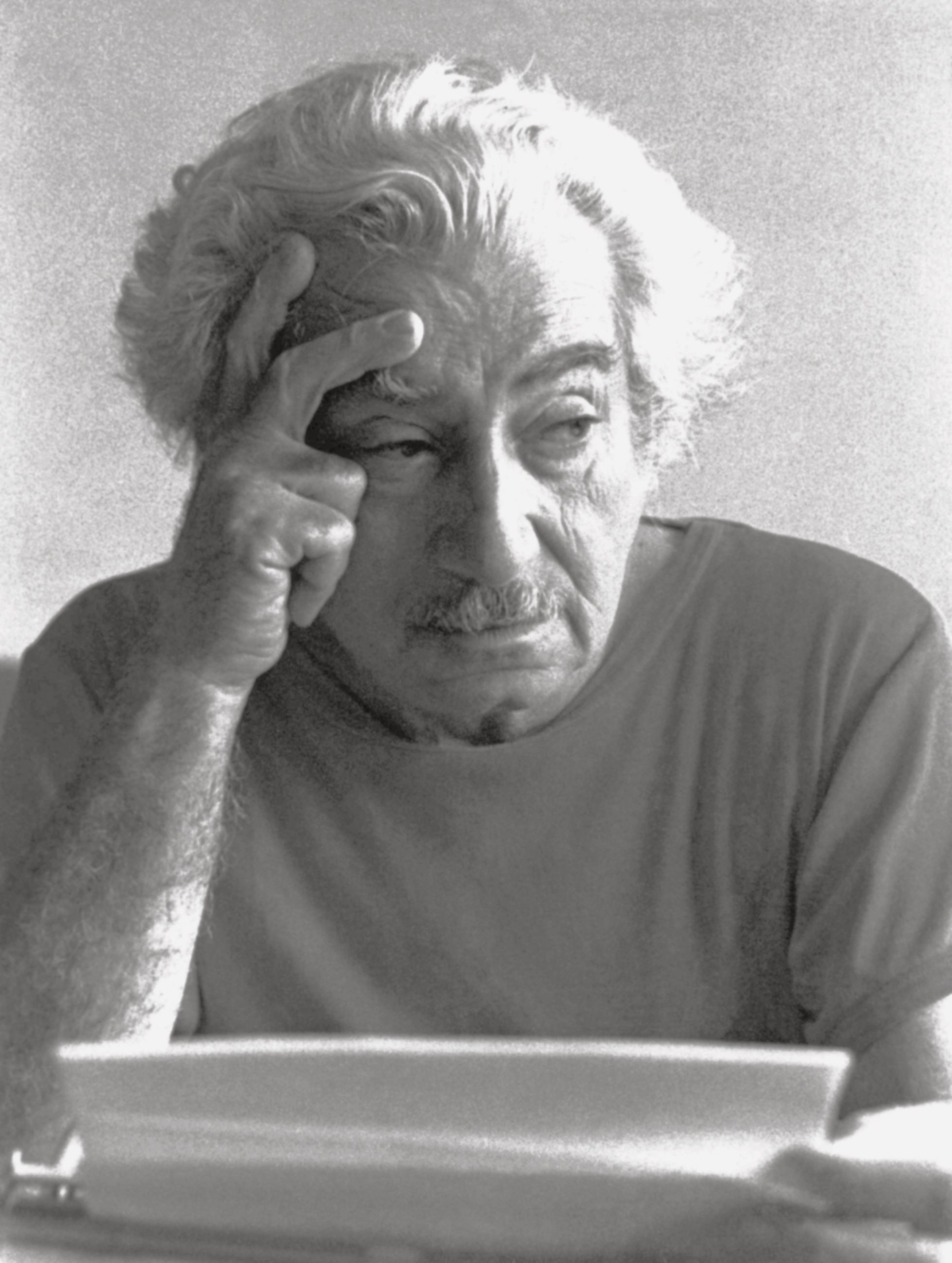
Jorge Amado (1912–2001) is widely regarded as the most celebrated and internationally renowned Brazilian author of all time. His 49 works have circulated across multiple media and in more than 80 countries, having been translated into 49 languages. A communist who wrote during Getúlio Vargas’s Estado Novo, Amado was deeply influenced by the Soviet model of the social novel. Although he later distanced himself from orthodox communism, he never abandoned either a socialist perspective or his commitment to the people of Brazil, particularly those of his native Bahia.
Beyond the richness of his literary production and the tensions between his writing and political trajectory, one striking feature of Amado’s work is the recurring presence of Arab characters. Perhaps the most famous is Nacib, from Gabriela, Clove and Cinnamon, whom older readers may remember through Marcello Mastroianni’s portrayal opposite the renowned Brazilian actress Sônia Braga. Like Nacib (marked by jealousy, sensuality, and an intense capacity for passion) Amado’s Arab characters embody the many faces of the Brazilian people who inhabit the tropics: businessmen, peddlers, prostitutes, widowers, bachelors, rogues, socialists, and landowners.
The following translation examines certain aspects of Amado’s Arab characters. It is intended as an introduction to, and exploration of, the richness of his literature for non-Portuguese-speaking readers. We caution readers that this text was written more than thirty years ago, and that some concepts, such as “racial democracy,” must be approached critically. Coined by Brazilian sociologist Gilberto Freyre during the rise of the Northeastern modernist movement (which positioned itself against the Southeastern modernist current, perceived as more deeply rooted in European traditions) the concept sought to argue that Brazil, in comparison to other colonized societies, was more racially inclusive and lacked the forms of systemic racism observed elsewhere.
There is no doubt that Brazilian miscegenation is unique, both biologically and culturally. Yet the notion of racial democracy also supported deeply problematic arguments that denied the existence of racism in Brazil. For many Arabs, however, the idea of racial democracy appeared, in practice, to hold true, as they encountered few visible barriers to integration into Brazilian society. This observation remains problematic both in the following text and in Amado’s own work, as it overlooks tensions within our own community. Nevertheless, our focus must remain on Amado’s characters, who populate his literature in varied and complex ways, and who themselves experience the very contradictions and inequalities that shape Brazilian society; for Amado’s literature was, after all, larger than its contradictions.
Arab Characters in the Novels of Jorge Amado
Introduction: General Aspects of Arab Culture
Islamo-Arab civilization has left its mark not only in the past. Its influence continues to spread across the contemporary world, present in nearly every sphere of human activity.
It has become something of a cliché to say that without Arabic numerals, and without the symbol for zero that the Arabs also developed, modern mathematics and the exact sciences would not exist. Christopher Columbus set sail for the West with absolute confidence in the Arab theory that the world was round. When the Portuguese ran into technical problems with cosmography, they called upon Arab masters for help. These scholars were drawn to Sagres, and they helped solve not only navigational issues but also sociological problems, such as how to compensate for or increase a population, as well as questions that arose from contact between Portuguese culture and other peoples. In this way, the Portuguese benefited from the experience and knowledge the Arabs had of non-European lands.
Population growth in the tropics took place under the influence of the Arab custom of granting a mixed-race child all legal rights. Vasco da Gama, whose pilot was Ahmad Ibn Majid (born in Oman to Bedouin ancestors), learned from the Arabs of Mozambique how to build wooden water tanks for the holds of ships. From the same Arabs, he learned to construct boats with sails woven from palm fronds. It was also an Arab chief who decisively taught the Portuguese about the antiscorbutic value of citric fruits.
And so Allah's warriors and scholars spread from the Fertile Crescent, north of the Arabian Peninsula, toward the West: to France, Sicily, and Spain. And also to the East, to China and India, leaving their mark on philosophy, the arts, architecture, metallurgy, and much more. Arab history is, therefore, one of the most important chapters in the history of humanity itself.
Historians acknowledge that while Charlemagne and his nobles were still learning to scribble their names, Arab scholars had already immersed themselves in Aristotle. A contemporary American historian notes that in Cordoba, with its seventeen enormous libraries (one of which held four hundred thousand volumes), "scientists delighted in luxurious baths at a time when Oxford University still considered bathing a dangerous habit." For centuries, as is well known, Arabic was the language of culture and progressive thought throughout the civilized world. That is, the language of knowledge itself, the language through which scientists, philosophers, and mathematicians expressed themselves.
More religious, astronomical, and geographical works were produced in Arabic than in any other language. And after Latin, the Arabic alphabet remains the most widely used in the world.
At this point, it is worth repeating the words of Philip Hitti, to gain a clearer understanding of what "Arab" and "Semitic" truly mean, and above all to preserve the historical roots of Islam and Semitism: "Of the two surviving peoples representing Semitic ethnicity, the Arab, far more than the Jew, has preserved the characteristic physical and mental traits of this family. Their language, though from a literary standpoint the youngest of the Semitic group, has nevertheless preserved a greater number of features of the mother tongue, including inflection, than Hebrew and its other sister languages."
Similarly, Islam, in its original form, is the logical perfection of Semitic religion. "In Europe and America, the word 'Semite' came to mean Jew, but the 'Semitic traits,' including the prominent nose, are not exclusively Semitic. These characteristics differentiate the Jewish type from the Semite and clearly represent an acquisition resulting from ancient interbreeding between the Hittite-Hurrians and the Hebrews." And further: "It was in Arabia that the ancestors of the Semitic peoples, including Babylonians, Assyrians, Chaldeans, Amorites, Arameans, Phoenicians, Hebrews, Arabs, and Abyssinians, originated. In a remote age, they lived there as a single people."
As for the presence of Arab elements in our own culture, we must save words, as a Bedouin saves water on a march, to condense into just a few pages a reduced picture of this immense presence. It begins with the Mozarabs, Christianized Arabs of the Iberian Peninsula who came with the colonizers during the very century of the Discoveries. These people and their descendants – and let it be said from the start, for making descendants, the inflamed Arab blood boiled just as hot as the Portuguese, by ancient tradition and even by taste, truth be told, the two always competing with each other – and no outsider ever influenced Portuguese nationality and nationalism so much, from the time of the Mouraria (Moorish) quarter and its conviviality, to the confrontations in India with the people of Gama, Cabral, and their successors.
In Brazil, the two cultures continued to unite their blood and sweat. Blood gave us the adjective morena (“of Moorish color”), and sweat gave us the prestigious verb mourejar (“to work hard”). There is also melenizar, or melenização, the tanning of the skin practiced on almost every Brazilian beach; a revelation of Gilberto Freyre, showing that our Portuguese ancestors wanted to look as brown as their native brothers in the hot lands.
Social and economic influences would fill volumes, not a few pages. As for spiritual influences, it is enough to recall a few to assess their presence. We need not even mention the picota (well-sweep) or the stork that drew water from the first wells in the Northeast. Nor the water mill or the canal irrigation brought by the Umayyads in the seventh century. But consider: coffee, sugarcane, cotton, oranges, silkworms, gunpowder, paper. The list is almost endless.
Just one or two examples of the Moorish creator of artistic and intellectual values reveal this presence. Even diluted over time, it remains clearly visible in what endures of the Arab spirit in everyday architecture: the taste for tiles, for mosaics. And, from our earliest times, the latticed window, the façade balconies, ornamental gates and grilles, thick adobe walls, colorful stained glass, whimsical fountains, Moorish roof tiles, and, beneath them, children in class chanting multiplication tables, while the cirandinha (popular folk dance) goes on in the courtyard. Women in mantillas. The custom of announcing a visit. Cuisine rich with spices. The profusion of sweets. And then a name appears: Abd al-Rahman. During a peaceful celebration in his palace, he composes lyric verses for the solitary palm tree in his garden. There lies Arab lyricism, which remained in the peoples who welcomed those two cultures; the Arab being, in truth, their origin and vector, marking them with its signs.
Add to this Jabir Ibn Hayyan (al-Jeber) giving his name to algebra. Al-Khwarizmi, giving his name to the algorithm. Our cultured elite still remembers Rhazes, Avicenna, and Averroës. And in Christian hymns, the popular poetry of the vilancico persisted. All this is merely a brief selection of examples, following the researcher, poet, and lexicographer J. Martins Ramos, who greatly helped us in writing The Arab Presence in Brazilian Culture.
Continuing with more examples from the Iberian melting pot where the language was forged, the branch that came to us still contributes several hundred words – from A to Z – some so common in our daily lives: “açougue” (butcher shop), “açude” (dam), “adobe” (adobe), “alarido” (uproar), “alazão” (sorrel horse), “algibeira” (pocket), “algodão” (cotton), “andaime” (scaffold), “anil” (indigo), “anta” (tapir), “armazém” (warehouse), “arrabalde” (outskirts), “arroba” (a unit of weight), “arroz” (rice), “azeite” (olive oil), “azeitona” (olive). And so as not to say we only got through A, we have “bairro” (neighborhood), “beringela” (eggplant), “cetim” (satin), “cifra” (cipher), “elixir” (elixir), “enxoval” (trousseau), “fardo” (bale), “fulano” (so-and-so), “limão” (lemon), “marfim” (ivory), “nuca” (nape), “oxalá” (God willing), “rés” (head of cattle), “roça” (farm), “safra” (harvest), “salamaleque” (salaam/greeting), “sapato” (shoe), “sofá” (sofa), “taça” (goblet), “talco” (talcum), “tarifa” (tariff), “xadrez” (chess), “xarope” (syrup), “xerife” (sheriff) – and on to Z: “zarcão” (red lead), “zênite” (zenith).
This is not to say, however, that so many words have a purely Arab origin. Often they came from Greek, Persian, Egyptian, or even Latin. Indeed, from all the peoples included in the Islamic expansion from the century of the Hegira onward. To all those who transmitted to us something – or much – of the soul of Arab culture, a few names can be recalled in this minimal survey, enough to show that the stock still bears fruit and flowers alongside us. That is why the Prolegomena, the Al-Muqaddimah of Ibn Khaldun, has appeared in our own language under the patronage of the Brazilian Institute of Philosophy.
For forty years, it was translated directly and completely by the Lebanese-Brazilian couple José Khoury and Angelina Bierrenbach Khoury. Nearly two thousand pages in three large volumes, presented by the poet, essayist, and physician Jamil Almansur Haddad. And thus one can read in Portuguese the work of the fourteenth century genius who created the theory of historical development, the father of sociology and social philosophy. Without exaggeration, one of the most enlightened minds of all time.
In the lineage of masters touched by the Arab flame, there is the scholar and teacher of generations of Brazilians for over seventy years, the mathematician and linguist João Tomaz Ueb. And speaking of translation and scholarship, the name of Antônio Houaiss looms large. His translation of Joyce’s Ulysses would have filled Hunayn Ibn Ishaq with joy – the same Hunayn to whom Caliph al-Ma’mun paid in gold the weight of each book he translated into Arabic.
But our letters, sciences, and arts also still hold survivors of an Ali Ibn Kazm, to whom is attributed the authorship of four hundred volumes on history, theology, logic, poetry, and other subjects. Also of an Ibn al-Khatib, physician, stylist, historian, geographer, and philosopher. Of an al-Kindi, astrologer, alchemist, optics expert, and music theorist. Of an Ibn Zaidun and of Omar Khayyam (though Persian, yet belonging to the Islamic galaxy). Add the theologians Ibn Arabi and Mosheh Ben Maimun (Maimonides), and the artists of the lineage of Mucharig, who had a chair placed next to the throne by Harun al-Rashid himself. And how many others who held more than a vizierate, like Ibn Zaidun, who added poetry to his other offices, and who stand out for their fame, like Baybars and Saladin.
Here we should recall the venerable Friar Abrantes (1737–1811 or 1813), the first professor of Arabic in Brazil, who came with the royal family, as is known, and authored Institutions of the Arabic Language for Use in the Schools of the Third Order (1774), the first work of its kind in Portuguese. More recently, there is the famous Said Ali (1861–1953), who among his students had Oswaldo Cruz, Antenor Nascentes, and the poet Manuel Bandeira. His philological work is one of the most important in the Portuguese language. Evanildo Bechara focuses on him in his First Essays on the Portuguese Language.
The roster of this descent is growing, and their presence is felt in letters and arts, in science and philosophy, in commerce, industry, and politics. Poetry, the essay, the novel, the short story, criticism, theater, journalism, music, the visual arts, and cinema all count among their number descendants of notables such as Mário Neme (short story writer, playwright, essayist, historiographer, philologist, journalist, humorist, and director of the Ipiranga Museum at the time of his death). Also the aforementioned Antônio Houaiss, whose bio bibliography would fill pages. Cecílio J. Carneiro, physician and novelist, winner of a prize for his novel The Bonfire. Célio Salomão Deba, David Nasser, Floriano Faissal, Emil Farhat, Mário Chamie, Mussa Kuraiem, Paulo Tacla, Permínio de Carvalho Ásfora, Raduan Nassar (the exquisite stylist of Ancient Tillage), Salomão Jorge, and the great poet Carlos Nejar, now immortalized with a chair at the Brazilian Academy of Letters.
Arab Characters in the Novels of Jorge Amado
With this brief look back at the many and abundant Arab marks on the various cultures of the world, but especially on our own, it is more than natural that a writer with roots as popular as Jorge Amado's would bring to his extensive work not only the strong presence of this influence in language (his primary instrument of expression) but also in the Arab or Arab descended characters who mingle so fully in what we call Brazilian racial democracy. They move among Black people, Creoles, Spaniards, and Portuguese, all created to live out the drama, tragedy, or love that pulses through the novels of this author, the most important and expressive writer of the "Grapiúna nation*," as defined by Adonias Filho, another no less significant expression of that singular civilization.
Jorge Amado is, in truth, the one who sang his village so well, with its Arabs, Black people, and others, that he became universal. He universalized his land and, by extension, the whole country. No reader of Arab origin, and no ordinary reader, whether in Brazil or in any country where his works have been translated, upon encountering any of his Arab characters, could find in them anything that was not genuinely Arab. Whether in their reactions, their psychological behavior, their physical description with its racial characteristics, or their occupations, which are predominantly commercial.
But there is also the rogue, the smuggler, and the intellectual. Circulating through his novels, coming from Ilhéus, Itabuna, Água Preta, or Salvador, his Arabs and their descendants move through his universe with the same naturalness as the country folk, colonels, lawyers, prostitutes, rogues, farmworkers, capoeiristas, hired guns, and anonymous people of the streets. And many have entered his work as markedly as Jubiabá, Guma, or Tereza Batista, becoming the main character, the one around whom the story or novel unfolds. This is certainly the case of Nacib, from Gabriela, Clove and Cinnamon, and of that fabulous Fadul Abdala from Showdown, whom I had the honor of knowing while still in the story's embryo. In October 1983, when Jorge Amado was beginning to write the novel, he sent me word in a letter:
“This novel of mine about the ‘obscure face’ is full of Arabs: one of them, Fadul Abdala, a fundamental character, is a great guy (porreta). Actually, a funny thing happened: while telling some of Fadul’s mishaps, I ended up writing a novella (45 pages) about Arabs in Itabuna, but I took it out of the book’s context where it weighed too heavily on the history of the village—whose name is Tocaia Grande, future Irisópolis. But when I finish the book, I will return to work on the novella about the struggle between God and the Devil for Fadul’s soul.”
This testimony, coming from the very heart of the climate in which his character moved and grew, truly as a "great guy," is more than a simple demonstration of the novelist's sympathy for Arabs. It reveals his concern for the authenticity of his characters. Thus, Fadul could not receive different treatment from any other genuinely Bahian, and therefore Brazilian, character. With his personal characteristics in behavior, speech, reactions, and physical traits, these elements mark the authenticity and unequivocal identity of each of his characters. What there is of invention, creation, or fictional fantasy in many of his creatures is not generated solely by Jorge Amado's creative genius. It is born from a known reality.
Who can say that Jorge Amado did not coexist with Nacib and Gabriela, for example, at the Vesuvius bar in Ilhéus, since the novelist's house (today the Ilhéus Cultural Foundation) was right next to that bar? The Nazal, Medauar, Maron, Daneu, and Chalub families were from Ilhéus. They were people he interacted with. Hence the raw material, the portrait, the model. Thus, Abdula, a merchant in Feira de Santana, is as legitimate as Nacib, Maron, or Daneu, who were real people from real life. Jorge Amado carries within himself the model for his Arab characters. He did not need to invent. It is not without reason, then, that they appear so naturally in almost all of his work. It is true that other novelists have Arab characters, but none presents more Syrians, Lebanese, and descendants than Jorge Amado. The list is immense, and even larger if we consider the mixtures.
Take, for example, Antônio Bruno, with a Brazilian name but a "romantic Bedouin profile." He was the grandson of the Arab Fuad Maluf and appears in Pen, Sword, Camisole. Likewise, Dona Fifi (a name with nothing Syrian or Lebanese about it) is Arab, the mother of a seventeen year old rogue. She appears in The Country of Carnival. Bia Turca, a somewhat ambiguous name because it is a nickname, appears in Tereza Batista: Home from the Wars. And Dona Émina Silva, wife of Dr. Ives and mother of "pretty daughters," lives on Sodré Street in Bahia and, like the others, is a descendant of Syrians.
These characters, although diluted in the Brazilian social fabric, are like the signs of Arab influence: widespread and often almost imperceptible. But when researched, like the countless descendants in our society, they reveal their origins. Cecílio J. Carneiro, mentioned here as a novelist and son of Arabs, has nothing in his name that reveals his Arab ancestry. The characters themselves come already stamped, as if with a passport or identity card that unequivocally states their ancestry. There they are, mingling with mulattos, capoeiristas, hired guns, or the high society of Bahia, Salvador, Ilhéus, and Itabuna. Consider that Fuad Maluf, who was a poet, "when he abdicated meter and scissors, he composed poems in Arabic." Or Abdala Curi, who had a shop in Baixa do Sapateiro (the "New Beirut" Shop). He is present and alive in Shepherds of the Night. Law student Antônio Murad bears his Arab mark in his surname. He was shipwrecked off the coast of Bahia but was saved by Guma in Sea of Death.
Asfura (which became Ásfora), Jorge Amado says, was a "Syrian who became a cocoa farmer" in Ilhéus. He is a character in The Golden Harvest. And since such a name, strange among us, appears in Jorge Amado, we should not forget the novelist Permínio Ásfora, also mentioned here. (The correct pronunciation is asfura, which means "little bird.") Aziz sent for his wife Zoraia from Syria. It should be Soraia, but the name, whether with Z or S, comes out as that of a Syrian immigrant settled in Ilhéus. From there he sent for his wife and two children from Syria: Salma, age six, and Nacib, age four. The novelist says both were conveniently registered as natives of Itabuna (then still called Tabocas) "in the notary office of old Sigismundo." There they are, above all Nacib, a genuine Arab, as one of the principal figures or characters in Gabriela, Clove and Cinnamon, along with his relatives and associates.
There is Nacib circulating through Ilhéus, walking through his fair, seeing the shops of his compatriots stuffed with customers from Água Preta, Rio do Braço, or the Recôncavo. Stopping at the railway station, listening to the singing of blind beggars, or crossing paths with poor compatriots, "peddlers of the road," in search of the ideal cook for his bar. Until one day he found his Gabriela, whom he would marry, have children with, and continue integrating the city's population. Without a doubt, the novelist Jorge Amado, his neighbor, had Nacib himself as a model, because the creature is so perfect that the creator could not have taken him from nothing or solely from his powerful imaginative machinery.
Alongside dominant Arabs as main figures in novels, like Nacib or Fadul, Jorge Amado sows others of greater or lesser importance. For example, a railway worker who became known as "Prophet." He was arrested at the Special Police headquarters of the Estado Novo in Rio de Janeiro, naturally as a communist. Even if this differs from the activities typically embraced by Arabs, he could only be Arab by the name Elias, which could even have been a code name.
Chalub is the son of a Syrian, a first generation Brazilian. He was an exalted chauvinist, says the novelist. Well, the Chalub family in Ilhéus was well known to the author. And this Chalub must have slipped from real life into the novel Dona Flor and Her Two Husbands. In Tereza Batista there is a Chamas, the old father of Kalil Chamas, established with an antiques shop on Rui Barbosa Street.
There is a Chafik, who appears in The Bowels of Liberty, in three volumes. He is a strange Syrian because he is a fugitive from Cayenne. But his adventure is quite Arab: he had killed his lover Ginette. He fled from Cayenne, where he would serve his sentence. He went to live in Mato Grosso, where the Arab colony is large, and from there moved to Paraguay, finding a certain type of commerce very attractive to Arabs, adventurers, and smugglers. In Tieta do Agreste appears a Chalita, with a "sultan's mustache, unshaven beard, eternal toothpick in his teeth." He is the owner of the Tupi movie theater and the Santana do Agreste ice cream parlor. Mamed Chalub, owner of the shop "Baronesa do Mundo" in Baixa do Sapateiro, who appears in Shepherds of the Night, has nothing to do with the one who appears in Dona Flor.
F. Murad is "the richest Arab in the city" of Bahia, father of the academic Antônio Murad, already mentioned. There was Fadel, a merchant with a "fabric shop in Itabuna's square," who testified at the notary's office that Salma and her brother Nacib Achcar (newly arrived from Syria) were born in the village of Ferradas, the novelist's homeland. Another from Ferradas is Farhat, friend of the great landowner Horácio da Silveira (The Violent Land).
Almost all the Arabs of Ilhéus, like the Syrian Fuad, owner of a shoe store who played poker at the Vesuvius, must have been collected live, so to speak, by Jorge Amado and included in his novels. Geninha Habib. The interpreter Haddad, who was devoured by sharks in the shipwreck in which Guma also died (Sea of Death). Jacob Galub, a somewhat ambiguous name, unclear whether Arab or Jew. Ibraim, a Syrian who peddled his goods around Bahia. "Seu" Isaque. Jamil. Najar, a dental surgeon in Aracaju. Abdula Farah, a merchant in Santana do Agreste, father of an only daughter, Sátima. The Lebanese Mahul (Tent of Miracles). Maluf, another from Ilhéus. Dona Maria, a very thin Arab woman, tenant of an entire attic of a large tenement house on Pelourinho Hill (Land of Carnival). Miguel Turco, an excited Arab and secretary of the Municipal Council of Belmont, homeland of the poet Sosígenes Costa. Nicolau, a foreigner and modest farmer (Jubiabá). Munira. The journalist Paulo Nacif. The social chronicler Roberto Sabad (Tent of Miracles). Salma Saad de Castro, who is none other than Nacib's sister, already mentioned. Samara, an Arab owner of the large tenement house at 68 Pelourinho Hill. The dancer Soraia, always dancing in the stories of Commander Vasco Moscoso de Aragão. Squeff. Tufik, a vagabond. Zalomar. Zebedeu, a boy, son of an Arab (Sweat).
In short, an entire population of Arabs and descendants pulses through Jorge Amado's novels, often almost anonymous, mentioned only by nickname or profession. For example: the "merchant," a straggler who took too long to close his shop. The "wife" (the wife of the Arab merchant in Ilhéus, Nacib's uncle). "Lebanese," a prosperous butcher. "Lebanese woman," the butcher's wife. "Rogue," the son of the Arab woman Fifi. "Peddler." "Syrian." "Turk." "Foreigner." "A compatriot." And even Colonel Florêncio, who is not Arab but is married to a "fiery daughter of Syrians."
All of this, in the final analysis, is an indication that reinforces the true meaning not only of so called Brazilian racial democracy but also of Arab influence on the life of the country. And, as I have said, because Jorge Amado is a true writer with popular roots, his work necessarily reflects this mixing, from which he shaped one of the largest galleries of characters in all of Brazilian literature, numerically speaking. There are so many that they could only be cataloged in his immense fictional universe with the help of a biographical dictionary, such as Paulo Tavares's magnificent Creatures of Jorge Amado, a work done in the spirit of, and to the same standard as, the catalog of fictional characters in Balzac's La Comédie Humaine.
And if, finally, there is any merit in this tracking of so many Arab characters in the work of Jorge Amado (and not all of them were included), let it be attributed here and now to the effort and dedication of the author of that work, which is so important for identifying the creatures created or adapted by the novelist.
As for me, like those other characters honored by Jorge Amado's friendship (including me in his work), I can only say, as a descendant of Arabs, a compatriot of those who populate the pages of his novels, that my pride in being a character of the most widely read Brazilian writer in the country and in the world is the same as I feel when Castro Alves, the greatest poet of Brazil, a Bahian like me and like Jorge Amado, sums up all the force of Arab influence among us, saying, even poetically, that we have our ancestry:
“Wandering Arab—I go to sleep in the afternoon
in the fresh shade of the raised palm tree.”
Notes
* Grapíúna nation is the term Amado used to refer to the southern region of Bahia, marked by cocoa harvest. “Grapiúna” is a historical term used to describe the region, but Amado gives to it the dimension of a nation in itself, as a term that represents the people of the region.
Jorge Medauar (1918-2003) was a novelist, short-story writer, and poet born from Lebanese parents in Água Preta do Mocambo, present-day Uruçuca, in the district of Ilhéus, Bahia. Medauar was the recipient of the Jabuti Prize as best short story/chronicle/novella writer in 1959, the same year Amado won as best novelist.
